

Philadelphia DUI Lawyer
Available Now
(215) 636-0160
24/7 for urgent matters
Philadelphia & Media, PA
Direct attorney access
Facing DUI Charges in Philadelphia?
When you’re facing DUI charges in Philadelphia, you need a trusted defender on your side. At Pagano Law, we understand how scary and overwhelming these charges can feel. Our experienced Philadelphia drunk driving lawyers are here to protect your rights and help you move forward. Call us today at 215-636-0160 for a confidential consultation about your case.
What to Do Immediately After a DUI Arrest in Philadelphia
If you were just arrested for DUI in Philadelphia, the next few hours matter enormously. Here is exactly what you should do:
1. Do not answer questions without a lawyer. After your arrest, you have the right to remain silent. Be polite, provide your name and license, but do not answer questions about where you were, what you drank, or where you were going. Anything you say will be documented and used against you.
2. Do not refuse chemical testing without understanding the consequences. Refusing a breath or blood test in Pennsylvania triggers an automatic 12-month license suspension — separate from any criminal case outcome — and your refusal is treated as a highest-rate DUI for penalty purposes. This doesn’t mean you should always submit to testing, but you should understand the stakes before deciding. If you’ve already made a choice, we can work with whatever happened.
3. Note everything you can remember. As soon as you are able, write down every detail: where you were stopped, what the officer said, how the traffic stop started, how long you waited before being tested, and any medical conditions that could affect test results. These details are critical for your defense and fade quickly.
4. Do not discuss your case on social media. Any post, photo, or check-in from the night of your arrest can and will be used against you. Say nothing publicly until your case is resolved.
5. Call a Philadelphia DUI lawyer before your arraignment. The earlier we are involved, the more we can do. We can appear with you at arraignment, review the arrest paperwork, identify time-sensitive suppression issues, and begin building your defense before any evidence is lost.
Call Pagano Law at 215-636-0160 now. We take calls around the clock for DUI emergencies.
Understanding DUI Charges in Philadelphia
Getting charged with a DUI in Philadelphia can change your life in an instant. As your Philadelphia DUI lawyer, we know that good people sometimes make mistakes. Whether this is your first offense or you’ve faced charges before, we’re here to help without judgment.
Pennsylvania has strict laws about drunk driving. The penalties can include fines, license suspension, and even jail time. But with an experienced Philadelphia drunk driving lawyer fighting for you, there’s hope for a better outcome.
How Our Philadelphia DUI Lawyers Can Help
At Pagano Law, we handle every aspect of your DUI case. From reviewing police procedures to challenging breathalyzer results, we examine every detail that could help your defense. Our Philadelphia DUI lawyers understand local courts, judges, and prosecutors. This knowledge helps us build the strongest possible case for you.
Need immediate help with your DUI case? Contact Pagano Law at 215-636-0160 now. We’re ready to start protecting your rights today.
Recent DUI Case Wins in Philadelphia
At Pagano Law, we provide aggressive DUI defense in Philadelphia. Check out our latest case win for a client who had their charges dismissed:
- Aggravated Assault DUI – Charges Dismissed Motion to Quash
DUI charges in Philadelphia are serious; therefore, it is critical to have aggressive legal defense in your corner. Have you been arrested for DUI? Get in touch with our Philadelphia DUI lawyers today at 215-636-0160!
Meet Greg Pagano and the Philadelphia DUI Defense Lawyer Team
When it comes to DUI defense in Philadelphia, Greg Pagano of Pagano Law brings something most defense attorneys cannot offer: 30 years of trial experience across some of the most high-stakes criminal cases in Pennsylvania’s recent history.
A Philadelphia native, Greg graduated from law school in 1993 with a dual degree — a Juris Doctorate alongside a Master’s in Business and Finance. Before opening his own practice, he spent two years clerking for the late Honorable Anthony J. DeFino of the Philadelphia Court of Common Pleas, Criminal Division, Major Trials Unit — one of the most demanding criminal courts in the state. That experience gave Greg a front-row seat to how Philadelphia judges think, how prosecutors build their cases, and what separates effective criminal defense from everything else.

He has tried thousands of cases since founding Pagano Law in 1995, representing clients in Pennsylvania and across the country — from New York and New Jersey to Florida, Ohio, and beyond. His work has spanned capital murder, RICO and organized crime cases, white collar crimes, and political corruption, as well as significant civil litigation against the City of Philadelphia and other public entities. He has recovered millions of dollars on behalf of crime victims and their families.
Greg has been recognized by Super Lawyers, Best Lawyers, The National Trial Lawyers, and holds a 10.0 rating on Avvo — distinctions earned through decades of results.
For someone facing a DUI charge in Philadelphia, that depth of experience matters. Greg understands the Philadelphia court system at every level — from the Municipal Court arraignment to the Common Pleas trial division — and he knows how to build a defense strategy tailored to how cases actually move through Philadelphia’s courts. Whether you are facing a first-offense DUI, a high-BAC charge, or a situation involving an accident or prior convictions, Greg Pagano has handled cases far more complex than yours and fought for outcomes that changed his clients’ lives.
Call Pagano Law at 215-636-0160 to speak directly with Greg about your case.
How Philadelphia DUI Arrests Work Differently
If you were arrested for DUI in Philadelphia, your case followed a process that is genuinely different from what happens in Montgomery County, Bucks County, or anywhere else in Pennsylvania — and those differences matter for your defense.
Philadelphia Police Conduct Field Sobriety Tests
Philadelphia police are trained to conduct field sobriety tests if an individual is suspected of DUI. Philadelphia police conduct DUI checkpoints and mandatory chemical testing, in which, if you refuse after arrest, you risk losing your license. When conducting a DUI traffic stop, many officers consider signs such as slurred speech or the smell of alcohol to determine whether a test should be administered.
The Roundhouse and the AID Officer
Once at the PDU, you were processed and turned over to an AID Officer (Accident Investigation Division). The AID Officer is specifically trained in DUI investigation and is responsible for reading you Pennsylvania’s Implied Consent warnings and administering the breath or blood test. This handoff from patrol officer to AID Officer creates potential issues for the prosecution that our attorneys know how to exploit: Was the chain of custody properly documented? Was the test administered within the required two-hour window from the time of your arrest? Were you properly informed of your rights before the test was administered?
The Two-Hour Rule
Pennsylvania law requires that breath testing be conducted within two hours of the initial stop. In Philadelphia, where you are transported to the PDU before testing takes place, delays in processing are common. If your breath test occurred more than two hours after you were first pulled over, the results may be inadmissible. We request and review all documentation of stop times, transport times, and test administration times in every Philadelphia DUI case.
What Happens After the Roundhouse
After testing, you will either be released with a citation or held for arraignment. If this is your first DUI and no aggravating circumstances were present, you were likely released. The formal charge will come through the mail, followed by a summons for a preliminary arraignment in Philadelphia Municipal Court. This is where your Philadelphia DUI attorney should already be working on your case, before you ever set foot in a courtroom.
What Sets Our Philadelphia DUI Defense Apart
When you choose Pagano Law, you’re getting more than just a Philadelphia drunk driving lawyer. You’re getting a team that truly cares about your future. We take time to understand your situation and explain your options in clear, simple terms. No legal jargon, just honest advice about your case.
Our approach has helped many clients facing DUI charges in Philadelphia. We work hard to minimize the impact on your life, job, and family. Whether through negotiation or aggressive courtroom defense, we fight to protect your interests every step of the way.
The DUI Legal Process in Philadelphia
Getting arrested for DUI starts a complex legal process. As your Philadelphia DUI lawyer, we guide you through each stage:
First, we review your arrest details and police reports. We look for any mistakes in how evidence was collected or your rights were handled. Then, we develop a defense strategy based on the specific facts of your case.
We handle all court appearances and paperwork, keeping you informed throughout the process. You can focus on your life while we focus on your defense.
Consequences of DUI Charges in Philadelphia and How We Help
A DUI conviction in Philadelphia can mean serious consequences. You might face:
License suspension that affects your ability to work Fines that strain your finances Possible jail time that disrupts your life Insurance rate increases that last for years A criminal record that impacts job opportunities.
In many cases, a DUI conviction also results in probation, where even a small misstep can lead to additional penalties. If issues arise after sentencing, working with a lawyer experienced in probation violation cases in Philadelphia can be critical to protecting your freedom.
As your Philadelphia drunk driving lawyer, we work to minimize these impacts. We explore every legal option to protect your license, freedom, and future.
First-Time DUI Offenses
If this is your first DUI charge, you’re probably worried and unsure what to expect. Our Philadelphia DUI lawyers regularly help first-time offenders get into programs that can prevent a conviction from staying on their record. We can explain programs like ARD (Accelerated Rehabilitative Disposition) and help determine if you qualify.
Don’t wait to get help with your first DUI charge. Contact Pagano Law at 215-636-0160 for a confidential consultation about your options.
Multiple DUI Offenses
Facing a second or third DUI charge in Philadelphia? The stakes are even higher, but we’re here to help. Our experienced Philadelphia drunk driving lawyers understand the enhanced penalties for repeat offenses and know how to fight for better outcomes.
We look at every angle of your case, from challenging evidence to exploring treatment options that courts view favorably. Our goal is to help you avoid the harshest consequences while getting the support you need.
Understanding Pennsylvania DUI Law (75 Pa.C.S. § 3802)
Pennsylvania’s DUI law under 75 Pa.C.S. § 3802 creates three tiers of offenses based on blood alcohol concentration (BAC):
- General Impairment (0.08%–0.099% BAC): First offense carries up to 6 months probation, a $300 fine, highway safety school, and alcohol treatment if ordered. No mandatory license suspension for first-time general impairment offenses.
- High Rate (0.10%–0.159% BAC): First offense means 48 hours to 6 months in jail, fines of $500–$5,000, 12-month license suspension, and ignition interlock.
- Highest Rate (0.16%+ BAC) or Controlled Substance DUI: First offense means 72 hours to 6 months in jail, fines of $1,000–$5,000, 12-month license suspension, and ignition interlock.
The tier system means your BAC level at the time of arrest directly determines your mandatory minimums. Our Philadelphia DUI attorneys analyze every factor to pursue the lowest possible tier or challenge the BAC evidence entirely.
Drug DUI in Philadelphia
Pennsylvania law prohibits driving while impaired by any controlled substance, metabolite, or combination of substances. Unlike alcohol DUI, there is no “legal limit” for drugs — any detectable amount of a Schedule I substance in your system can result in a DUI charge under the highest-rate tier, even if you were not actually impaired at the time of driving.
This creates a serious problem for medical marijuana patients. Pennsylvania’s DUI statute does not distinguish between recreational and medical use. If THC metabolites are found in your blood, you can be charged with the highest-rate DUI even if you used marijuana legally and days before driving. Our Philadelphia DUI lawyers understand the science behind drug testing windows and work with toxicology experts to challenge these results.
Why Choose Pagano Law for Your DUI Defense in Philadelphia
When choosing a Philadelphia DUI lawyer, experience and dedication matter. At Pagano Law, we offer:
Years of experience defending DUI cases in Philadelphia courts Deep knowledge of local DUI laws and procedures Personal attention to every client Clear communication throughout your case Aggressive defense of your rights Compassionate understanding of your situation
We’re ready to put our experience to work for you. Call 215-636-0160 now to speak with a Philadelphia drunk driving lawyer who cares about your case.
Common Philadelphia DUI Defense Strategies
As your Philadelphia DUI lawyer, we examine every aspect of your case for potential defenses. Was the traffic stop legal? Were field sobriety tests done correctly? Was the breathalyzer properly calibrated? These details matter, and we know how to use them to strengthen your defense.
We also look at options like:
- Challenging blood alcohol testing procedures
- Questioning officer observations and procedures
- Examining maintenance records for testing equipment Investigating medical conditions that could affect test results
Getting Started with Your DUI Defense in Philadelphia
Time is crucial in DUI cases. Evidence needs to be preserved, deadlines must be met, and important decisions need to be made quickly. The sooner you contact a Philadelphia drunk driving lawyer, the better your chances for a positive outcome. Get in touch with us today at 215-636-0160 today!
Case Results
DUI Penalties in Philadelphia by Offense Number
First DUI Offense: General impairment: probation up to 6 months, $300 fine, no license suspension. High rate: 48 hrs–6 months jail, $500–$5,000 fine, 12-month suspension. Highest rate: 72 hrs–6 months jail, $1,000–$5,000 fine, 12-month suspension.
Second DUI Offense (within 10 years): General impairment: 5 days–6 months jail, $300–$2,500 fine, 12-month suspension. High rate: 30 days–6 months jail, $750–$5,000 fine, 12-month suspension, ignition interlock. Highest rate: 90 days–5 years jail, $1,500–$10,000 fine, 18-month suspension, ignition interlock.
Third or Subsequent DUI: All tiers carry felony-level consequences. Highest rate carries 1–5 years in state prison, fines up to $10,000, and an 18-month license suspension. At this level, you need an experienced Philadelphia DUI lawyer who knows how to litigate aggressively.
The ARD Program — Avoiding a DUI Conviction in Philadelphia
Pennsylvania’s Accelerated Rehabilitative Disposition (ARD) program is one of the most powerful tools available to first-time DUI offenders. If accepted, it allows you to complete a supervised program — typically including probation, community service, highway safety school, and sometimes alcohol treatment — in exchange for having your charges dismissed and your record expunged.
ARD eligibility depends on several factors: whether this is your first DUI, whether there was a minor in the vehicle, whether an accident caused serious injury, and the specific circumstances of your arrest. The Philadelphia District Attorney’s office manages ARD acceptance, and not everyone qualifies automatically. Our attorneys help you build the strongest possible ARD application.
Critically, ARD can be expunged from your record once you successfully complete the program, meaning the arrest effectively disappears. For someone with a professional license, a security clearance, or a job that requires driving, ARD is often a life-changing outcome.
Philadelphia DUI Treatment Court
The ARD program is an excellent option for first-time DUI offenders, but it is only available once. If you are facing a second or subsequent DUI charge, you may still have a path to avoiding the harshest penalties through Philadelphia’s DUI Treatment Court.
What Is DUI Treatment Court?
Philadelphia Municipal Court operates a dedicated DUI Treatment Court designed for defendants who have multiple DUI charges and an underlying substance abuse disorder. Rather than following the traditional prosecution-and-sentencing path, Treatment Court offers an intensive, supervised treatment program as an alternative.
Participants who are accepted into the program typically complete:
- Regular court check-ins with a dedicated Treatment Court judge
- Inpatient or outpatient substance abuse treatment
- Random drug and alcohol testing
- Community service requirements
- Individual and group counseling sessions
Successful completion of the program can result in significantly reduced penalties compared to a standard conviction on a second or third DUI.
Who Is Eligible?
Eligibility is determined by the court and the Philadelphia District Attorney’s office. Factors considered include the nature of your prior DUI history, whether a diagnosed substance use disorder is present, and the specific circumstances of the current charges. Acceptance is not guaranteed, and having experienced legal counsel present the strongest possible case for your admission is critical.
Is Treatment Court Right for Your Case?
Not every repeat DUI defendant should pursue Treatment Court. For some clients, challenging the evidence and fighting the charges at trial or through suppression motions is the better path. Our attorneys evaluate every option before recommending a strategy — including whether Treatment Court, ARD (if this is your first offense), a negotiated plea, or aggressive litigation makes the most sense for your specific situation.
Call Pagano Law at 215-636-0160 to discuss whether DUI Treatment Court or another strategy is the right approach for your case.
Challenging the Evidence: How We Fight Your DUI Charges in Philadelphia
Challenging the Traffic Stop: Under the Fourth Amendment, police must have reasonable articulable suspicion before pulling you over. If the stop was pretextual or lacked legal basis, any evidence gathered — including breathalyzer results and field sobriety tests — may be suppressed. Our attorneys file suppression motions when law enforcement violates your constitutional rights.
Field Sobriety Test Challenges: The NHTSA Standardized Field Sobriety Tests (SFSTs) — the walk-and-turn, one-leg stand, and horizontal gaze nystagmus — are heavily dependent on proper administration. Medical conditions, uneven surfaces, improper lighting, footwear, and officer error can all invalidate these results. We challenge whether tests were administered and interpreted correctly.
Breathalyzer Accuracy: Pennsylvania uses the Intoxilyzer 8000 and similar devices for breath testing. These machines require regular calibration, proper maintenance, and certified operators. We request maintenance logs and calibration records. A single gap in documentation can render the result inadmissible.
Blood Test Challenges: Blood draws must follow strict protocols — proper collection tubes, timely refrigeration, chain of custody documentation, and certified lab analysis. Even a minor procedural failure can open the door to challenging the results.
Rising BAC Defense: Alcohol continues to absorb into the bloodstream for 30–90 minutes after your last drink. If you were stopped shortly after drinking, your BAC at the time of testing may have been higher than it was when you were actually driving. This “rising BAC” defense can be critical in borderline cases.
Were You Actually Driving?
One of the most overlooked defenses in Philadelphia DUI cases is also one of the most powerful: in Pennsylvania, the prosecution doesn’t need to prove you were driving. They need to prove you were in “actual physical control” of the vehicle — and that’s a higher bar than it sounds.
What Does “Actual Physical Control” Mean?
Pennsylvania courts look at the totality of circumstances to determine whether someone was in actual physical control of a vehicle. Key factors include: whether you were in the driver’s seat, whether the engine was running, whether the keys were in the ignition, and whether the vehicle was on a public road or in a private lot.
This opens real defense opportunities in scenarios that might surprise you:
- Sleeping in a parked car: If you were in the driver’s seat of a running vehicle to stay warm on a cold night, a court could find actual physical control — but if the keys were in your pocket and the car was off, the argument is far weaker for the prosecution.
- Parked in a private lot: If your vehicle was in a parking lot and not on a public roadway, you may not meet the legal definition of operating a motor vehicle under Pennsylvania DUI law.
- Not present when police arrived: If there was an accident and you were not in or near the vehicle when officers arrived, the Commonwealth must establish that you were the driver — which is harder to prove than it seems, particularly if there were no witnesses.
- Passenger seat scenarios: Courts have found in some circumstances that being in the passenger seat, even with keys accessible, does not constitute actual physical control.
Our Philadelphia DUI attorneys analyze every detail of how and where you were found in relation to the vehicle. In borderline cases, this defense can mean the difference between a conviction and a dismissal.
DUI with a Minor in the Vehicle
If a minor (anyone under 18) was in the vehicle at the time of a DUI arrest, Pennsylvania law dramatically increases the penalties. Under 75 Pa.C.S. § 3803(b), this enhances the grading of the offense. A conviction can also trigger child endangerment charges under 18 Pa.C.S. § 4304. These cases require experienced DUI defense counsel who understands both the criminal and family court implications.
DUI Involving a Car Accident
If your DUI arrest stemmed from an accident, you are facing a significantly more serious situation — and you need an attorney immediately.
Upgraded Penalties for DUI With a Crash
Under Pennsylvania law, a DUI that involved an accident is treated more harshly at sentencing, even for a first offense. A first-time DUI that resulted in a crash with injury is typically treated on par with a second DUI offense in terms of sentencing guidelines. If someone suffered serious bodily injury — defined as injury that creates a risk of death or causes permanent disfigurement or loss of a body part — you can be separately charged with Aggravated Assault by Vehicle While DUI under 75 Pa.C.S. § 3735.1, a felony of the second degree.
DUI Homicide by Vehicle
If someone died as a result of a DUI-related crash, the charge becomes Homicide by Vehicle While DUI under 75 Pa.C.S. § 3735. This is a felony of the second degree carrying a mandatory minimum sentence of three years in state prison per victim. This is among the most serious criminal charges in Pennsylvania, and it requires the most experienced criminal defense representation available.
Pagano Law handles Homicide by Vehicle cases and understands the intersection of DUI law and vehicular homicide charges better than most firms in Philadelphia.
Civil Liability Runs Alongside Criminal Charges
When a DUI involves a crash, you may be facing both criminal prosecution and a civil lawsuit from injured parties simultaneously. Our attorneys work to protect your interests on both fronts, coordinating your criminal defense with any civil proceedings to avoid statements or admissions that could harm you in either arena.
Insurance Implications
A DUI conviction arising from an accident will almost certainly result in your auto insurance being canceled or non-renewed, and future premiums will increase substantially. In some cases, your insurer may attempt to deny coverage for the accident entirely. Our attorneys advise clients on these collateral consequences from the start, not after the fact.
If you were involved in an accident and charged with DUI, call Pagano Law at 215-636-0160 immediately. Time-sensitive evidence — accident reconstruction data, surveillance footage, witness statements — disappears quickly. The sooner we get involved, the stronger your defense.
DUI Checkpoints in Philadelphia
DUI sobriety checkpoints are legal in Pennsylvania, provided police follow specific constitutional requirements under Commonwealth v. Tarbert and Commonwealth v. Blouse. Officers must use a neutral formula for stopping vehicles (such as every third car), provide advance public notice, and limit the duration of stops. If checkpoint procedures were not followed correctly, evidence obtained at the checkpoint can be challenged. Our Philadelphia DUI attorneys scrutinize checkpoint operations in every relevant case.
Ignition Interlock Devices in Pennsylvania
Pennsylvania’s Ignition Interlock Limited License (IILL) program requires certain DUI offenders to install an ignition interlock device (IID) on their vehicles before regaining driving privileges. The device requires a clean breath sample to start the car and periodic rolling retests while driving.
IID requirements apply to most high-rate and highest-rate DUI convictions, all second and subsequent offenses, and anyone who refused chemical testing. Our attorneys advise clients on IID requirements from the start so there are no surprises, and we fight to minimize or eliminate these requirements wherever possible.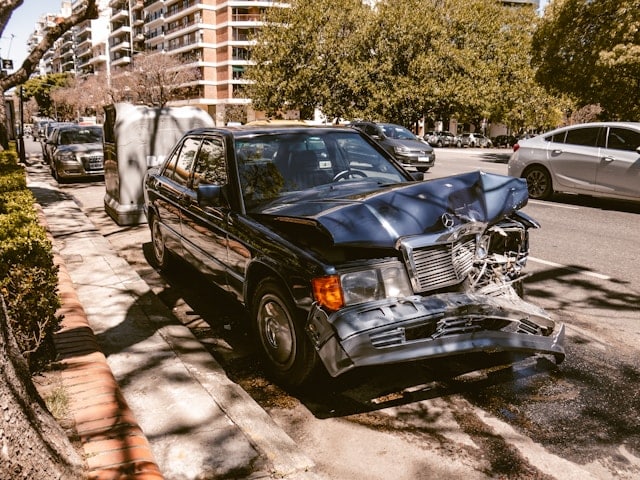
DUI and Your Professional License
Doctors, nurses, teachers, CDL holders, lawyers, and other licensed professionals face consequences beyond the standard criminal penalties:
- CDL Drivers: A DUI conviction while operating a commercial vehicle or with a BAC of 0.04%+ results in a one-year CDL disqualification for a first offense and a lifetime ban for a second.
- Healthcare Workers: Pennsylvania’s Professional Licensure Act may require reporting a DUI conviction to the relevant licensing board. The State Board of Medicine and Board of Nursing both have review processes.
- Teachers: The Pennsylvania Department of Education treats criminal convictions as grounds for certificate revocation proceedings.
If your professional license is at stake, you need a Philadelphia DUI attorney who understands the collateral consequences and can coordinate your defense with any board proceedings.
DUI Expungement in Pennsylvania
After completing ARD, your record can be expunged. For DUI convictions (not ARD), expungement is generally not available in Pennsylvania unless you are 70 years old with no arrests for 10 years, or the Governor grants a pardon. This makes fighting the original charge — and pursuing ARD when available — critically important from the start.
Next Steps for Your Philadelphia DUI Defense
Don’t let a DUI charge define your future. With Pagano Law as your Philadelphia DUI lawyer, you have a strong advocate ready to fight for your rights. We understand what you’re going through and know how to help.
Take the first step toward protecting your future. Call Pagano Law at 215-636-0160 today. Our experienced Philadelphia drunk driving lawyers are ready to start working on your defense immediately.
Remember, having the right legal team can make all the difference in your DUI case. Contact us now to learn how we can help you move forward from this challenging time.
What We Handle
Key areas we fight for you
Track Record
Legal Case Results
Client Stories
What clients say about us
Questions about Philadelphia DUI Lawyer
Our attorneys field these questions daily. Here are the most common ones — but every situation is unique. Call us for a direct answer about your case.
Speak with an AttorneyWhat is the legal BAC limit in Pennsylvania?
The legal limit is 0.08% for non-commercial drivers. However, you can be charged with DUI below this level if an officer determines you were impaired. Commercial drivers face a 0.04% threshold, and drivers under 21 can be charged at 0.02% BAC.
How long does a DUI stay on my record in Pennsylvania?
A DUI conviction stays on your criminal record permanently unless expunged or pardoned. Prior DUI offenses count against you for 10 years when determining penalties for a new DUI charge.
What happens at my first DUI court appearance in Philadelphia?
Your first appearance is typically an arraignment where charges are formally read and bail is set or confirmed. Our attorneys appear with you at every stage, beginning at this hearing.
Can I refuse a breathalyzer in Pennsylvania?
Yes, but there are serious consequences. Pennsylvania’s implied consent law means that refusing chemical testing results in an automatic 12-month license suspension for a first refusal, and your refusal can be used against you in court. Additionally, refusal means you are automatically charged under the highest-rate DUI tier.
Will I lose my license after a DUI in Philadelphia?
It depends on the tier and prior history. General impairment first offenses do not carry mandatory suspension. High rate and highest rate first offenses carry 12-month suspensions. Second offenses carry 12–18 months depending on tier.
How much does a Philadelphia DUI lawyer cost?
DUI attorney fees in Philadelphia vary by firm and case complexity. We offer confidential consultations at no charge. Call us at 215-636-0160 to discuss your case and our fees.
Can I be charged with DUI if I was in a parked car?
Possibly. Pennsylvania’s DUI law does not require that you be actively driving — it requires that you were in “actual physical control” of the vehicle. Courts look at whether the engine was running, whether you were in the driver’s seat, whether the keys were in the ignition, and whether the car was on a public road or in a private lot. If you were sleeping in a parked car when police found you, this may be a viable defense. Contact us to discuss the specific facts of your situation.
What happens if I got a DUI after an accident in Philadelphia?
A DUI that involved a crash carries significantly upgraded penalties under Pennsylvania law. If someone was injured, you may face additional charges like Aggravated Assault by Vehicle While DUI. If someone died, the charge can be elevated to Homicide by Vehicle While DUI, a felony with mandatory prison time. You should contact an attorney immediately — accident-related evidence disappears quickly and is critical to your defense.
What is the DUI Treatment Court in Philadelphia?
Philadelphia Municipal Court operates a DUI Treatment Court for defendants facing multiple DUI charges who have an underlying substance abuse disorder. It offers a treatment-focused alternative to traditional prosecution. Successful participants can face significantly reduced penalties. Not everyone is eligible, and acceptance requires a strong application. Our attorneys can evaluate whether this program is an option in your case.
What if I was charged with DUI but I only had cannabis and a medical marijuana card?
Pennsylvania does not distinguish between medical and recreational marijuana for DUI purposes. Any detectable amount of THC metabolites in your blood can result in a DUI charge at the highest-rate tier, even if you used marijuana legally and days before driving. We work with toxicology experts to challenge these results based on detection windows and the difference between active impairment and residual metabolites.
Is DUI a felony in Pennsylvania?
Most first and second DUI offenses in Pennsylvania are misdemeanors. However, a third or subsequent DUI is typically charged as a felony, as is DUI that caused serious injury or death (Aggravated Assault by Vehicle While DUI or Homicide by Vehicle While DUI). A DUI with a minor in the vehicle can also be graded as a felony. Our attorneys explain the exact grading of your charges during your consultation.